

Strengthening Agroforestry in the Czech Republic
On April 10, 2025, the Czech Association for Agroforestry organized a seminar in collaboration with…
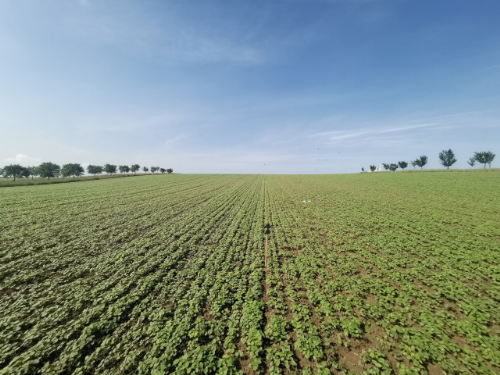
Living Lab profile Type of Living Lab: Seed Lead partner: CZU, VUKOZ Climatic zone: Continental central EU Type of Agroforestry Systems: Silvoarable, silvopastoral Type of farming: Organic and conventional Main challenges: Biodiversity, soil health, climate change Context and experience Living Lab Czechia is one of the three seed Living Labs of DigitAF, which means it is based on a new group of practitioners, policy makers and other beneficiaries. LL Czechia was established at a national level and covers the whole country, but high number of participants are from two regions Central Bohemia and South Moravia. The LL Czechia is shared with other HORIZON…

Type of Living Lab: Seed
Lead partner: CZU, VUKOZ
Climatic zone: Continental central EU
Type of Agroforestry Systems: Silvoarable, silvopastoral
Type of farming: Organic and conventional
Main challenges: Biodiversity, soil health, climate change
Living Lab Czechia is one of the three seed Living Labs of DigitAF, which means it is based on a new group of practitioners, policy makers and other beneficiaries. LL Czechia was established at a national level and covers the whole country, but high number of participants are from two regions Central Bohemia and South Moravia. The LL Czechia is shared with other HORIZON project REFOREST to strengthen complementary benefits of both projects.
The Living Lab now consists of around 40 participants, 20-30 participate on each LL meeting. The ‘practice’ is represented by around 20 farmers from different agricultural sectors (crop, animal, mixed production), different size and different levels of experience with agroforestry. Five agroforestry advisors are included are included in the LL. Altogether, seven policy representatives in the LL include policy makers on both national (Ministry of Agriculture, Ministry of Environment, Nature Conservation Agency, State Agriculture Intervention Fund and Local Action Groups Centre) and provincial level (Municipality of South Moravia and Central Bohemia). In general, the formation of the Living Lab is considered flexible.
During the first year of the project, a survey was set up to understand about the use, the needs and wants of the various stakeholders on digital tools. The participants perceived as the greatest need for implementation of agroforestry would be a suitable tool for tree selection, design, and management. A very useful tool would also be a financial evaluation of AF, and soil health management. The Czech LL have met several times to make presentation of the selected digital tools that the participants had chosen as most needed and interesting for them, via online meetings during April and May 2024 The first session was on species selection and system design (AgroforesTreeAdvice, RegenWorks), the second on carbon and climate (CARAT, Farm Carbon Toolkit), third on economics and tree performance (INTACT, Farm Safe), and the forth on biodiversity assessment (Cool Farm and Global Farm Metrics). During 2024 most emphasis was put on the development of the Czech version of tree selection tool within AgroforesTreeAdvice.
In 2025, during the first meeting in April, innovative tools to support the correct selection of tree species for agroforestry systems, specifically Czech version of AgroforestTreeAdvice and Deciduous were presented and tested. Furthermore, tools for carbon assessment and sequestration, CARAT and Farm Carbon Calculator, were presented.
On April 10, 2025, the Czech Association for Agroforestry organized a seminar in collaboration with…
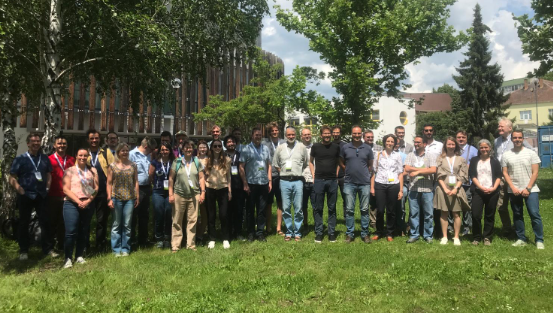
On 27 & 28 May 2024, DigitAF project partners gathered in Brno (Czech Republic) for…