
Policies and MRV for agroforestry carbon farming in the voluntary and statutory sectors
Policies and MRV for agroforestry carbon farming in the voluntary and statutory sectors (DigitAF Project Deliverable 1.5) is out!*💡 The report emphasises that robust, cost-effective Monitoring, Reporting, and Verification (MRV) methodologies are essential for credible carbon farming certification.It outlines the complexities of proving “additionality” and managing carbon reversal risks, noting that agroforestry poses lower risks compared to traditional forestry.🌲By treating biodiversity as a core objective rather than a mere co-benefit, DigitAF positions agroforestry as a crucial, nature-based solution to achieve a resilient, carbon-neutral European agricultural sector by 2050.Read full document here ⬇️⬇️https://zenodo.org/records/19373429 by Beatrice Croce from European Landowners’ Organization,…
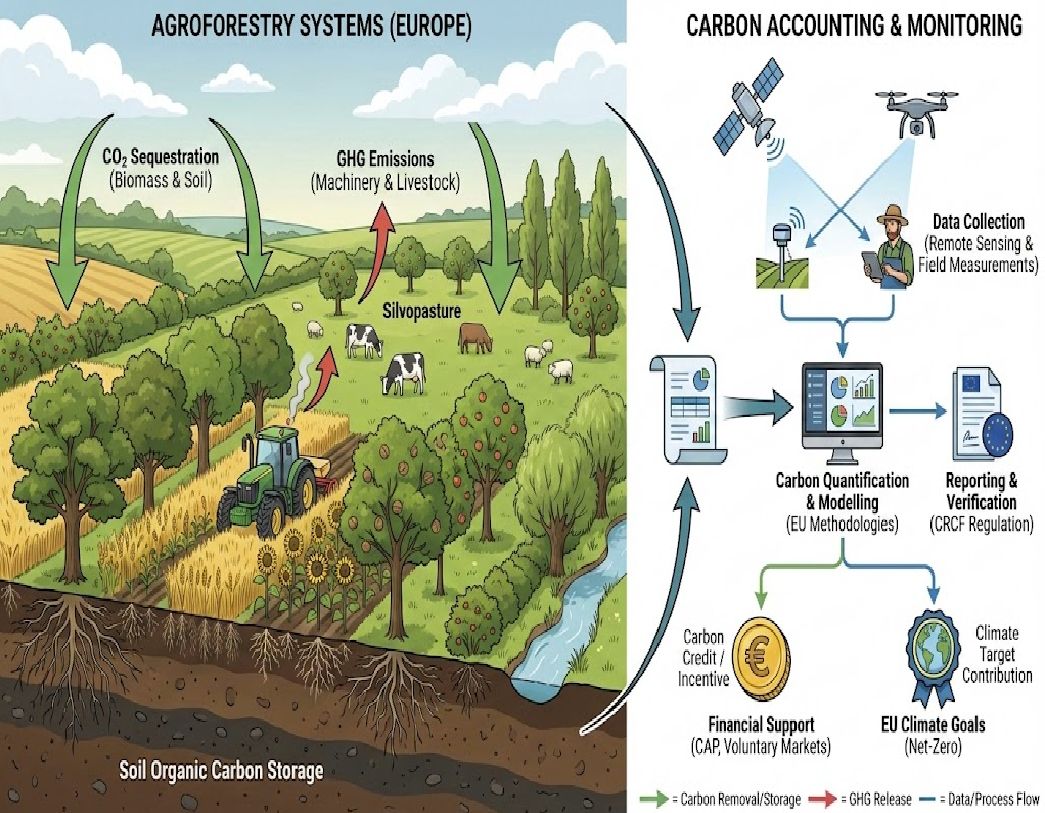
Policies and MRV for agroforestry carbon farming in the voluntary and statutory sectors (DigitAF Project Deliverable 1.5) is out!*
💡 The report emphasises that robust, cost-effective Monitoring, Reporting, and Verification (MRV) methodologies are essential for credible carbon farming certification.
It outlines the complexities of proving “additionality” and managing carbon reversal risks, noting that agroforestry poses lower risks compared to traditional forestry.
🌲By treating biodiversity as a core objective rather than a mere co-benefit, DigitAF positions agroforestry as a crucial, nature-based solution to achieve a resilient, carbon-neutral European agricultural sector by 2050.
Read full document here ⬇️⬇️
https://zenodo.org/records/19373429
by Beatrice Croce from European Landowners’ Organization, Gerry Lawson from European Agroforestry Federation (EURAF), Michael den Herder from European Forest Institute, Ermias Betemariam from World Agroforestry, Paul Burgess from Cranfield University,Waas Thissen from Louis Bolk Instituut and Marie Gosme from INRAE
*pending validation, but might still be interesting for you!